Sunday, April 09, 2006

Have We Lost it or Are We Just Lost?

Here's a response I posted on the Guardian newspaper's blog, Comment is Free. It's a response to another blog entry posted by a Guardian editor, Richard Adams,who suggests that perhaps the U.S.– politically, at least – has finally gone mad. Adams began to wonder about the sanity of our country after, on a recent trip to America, he moseyed on into a Barnes and Noble, only to find books such as Al Franken's Lies and the Lying Liars who Tell Them, Bernard Goldberg's 100 People who are Screwing up in America, and, of course, Michael Moore's Dude, Where's my Country. Adams also noted in his entry how prominently these books were displayed at the store.

Each book Adams refers to has opinions, musings and rantings in it that range from rash to virulent, which, as mentioned, prompted Adams to ask himself, "Have Americans finally lost it?"


"It's true that the US has always had a strand of adversarial literature, but the sheer weight of the current crop surpasses previous efforts. These books aren't being sold in some dodgy little bookshop – this is in Barnes & Noble. These books are being produced by the likes of HarperCollins...It's hardly breaking news to identify America as split violently in two, but the savagery of the attacks is deeper and more enduring than many in Europe realizes. Is it healthy, or is it a sign of a sick society? If nothing else it suggests a long, unhealthy bout of introspection."

So, I said...

"Many interesting points, Mr. Adams, but I think the most interesting of all – and the one you just mentioned in passing – deals with America's mentality in a post-9/11 world. As you said, publishers don't publish books if they don't sell, and the themes of the books seen in Barnes and Noble are indeed a reflection of the zeitgeist. So, now, what can we infer? This: Americans are scared. Americans are confused. 9/11 threw this country into a tailspin. Americans, more than ever, want to reaffirm who they are. Why? Because 9/11, understandably, made the condition of an already uncertain world seem more uncertain.

Cue the polemical authors.


Let's face it, the political situation out there is pretty complex. And most Americans simply can't grasp such complexities. That's why they need these polemical authors to help them "better navigate" the state of politics and culture. Unfortunately, though, most of these authors are probably better at ranting than they are writing."

What do you think? Are Americans simply now reaping the rotten fruit of two bad decisions, namely, their decision for president in 2000 and 2004? Or was it 9/11 that threw this country into a tailspin? Are our Red state-Blue state rivalries symptomatic of an unhealthy society?

1+1=3


Wow, how about this Bush guy, huh? First he says that whoever leaked the information to a NY Times reporter that led to a C.I.A. agent’s cover getting blown would be punished or brought to justice, or whatever the fuck other hokey phrase he often uses. Well, guess what, boys and girls, it turns out Bush himself authorized those leaks about Valerie Plame.

God bless America.

Saturday, March 18, 2006

Keen on Keane

I don't usually endorse any bands or recommend music – frankly, people have such different tastes when it comes to music that recommendations often fall on deaf ears.

But

there is one band out there really worth recommending: Keane . This isn't some wild discovery, they have been out for a while. Still, I think they deserve a nod. Who are they? Three guys from the U.K., and they're drums, bass and vocals. Thankfully, Keane isn't corny like some other guitar-less trios(Ben Folds Five, anyone). Their melodies are sweet and their lyrics hold up (something rarely seen today).
Have a listen, if you would.

Tuesday, March 14, 2006

Crash into Lee


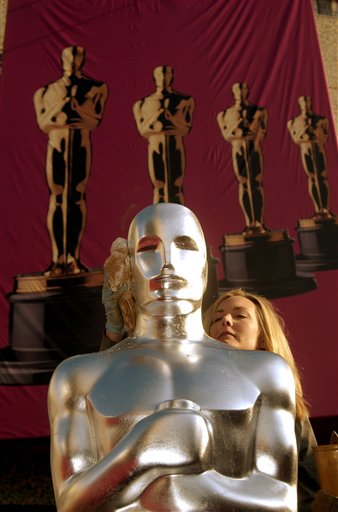
Did you think that Oscar night was a crock of shit, too? Maybe you just thought the Academy's choosing of "Crash" for best picture was about as ingenuous as, say, the National Socialists' explanation of the Reichstag Fire. Maybe. Well, either way, just listen to what Anne Proulx, author of Brokeback Mountain, had to say about that gala night.

Sunday, March 12, 2006

Reprehensible, Lamentable

Baghdad, Iraq, March 11 — Tom Fox, the kidnapped American peace worker whose body was found this week, had apparently been tortured by his captors before being shot multiple times in the head and dumped on a trash heap next to a railway line in western Baghdad, an official at the Iraqi Interior Ministry said Saturday.

This lead from today's Sunday New York Times says a lot. In a sense, it epitomizes the situation in Iraq: merciless, animalistic and bloody. No matter what your politics, one must admit that this war is consuming far too many lives. And I'm sick of it. I'm sick of reading the newspaper every day and seeing the names of the dead. I'm sick of the apathy many Americans – especially those in my age group – express toward the war. I'm sick of blaming the president or vice president for all these woes. I'm sick of not being able to do anything about being sick.

But, then again, it's really not about me. It's about Tom Fox's daughter, who, for the rest of her life, will have to live with nightmares of terrorists torturing, then killing, her father.

It's about an Iraqi family, whose lives have been ripped apart by the death of two sons and a father – two sons and a father who still would be alive today, had American forces not accidentally gunned them down at a checkpoint in Iraq a few years ago.

It's about all the American families who have lost sons or daughters at the cruel hand of this war.

How can one justify these deaths or these shattered lives?

Saturday, March 11, 2006

Unshrouding Dowd


Came across this interesting, albeit lengthy, article about Marueen Dowd in the Guardian. It covers everything from Judy Miller, to Dowd's feelings about "truthiness," plus all her feminist musings. It's worth looking at.

Friday, March 10, 2006

Fodder for Debate


Last week, looking to blow off steam, I visited the "Comedy Cellar," a comedy club in the West Village. The Cellar is known for nurturing talents like Dave Chappell, Colin Quinn and Dave Attel. Needless to say, the club's comedians aren't politically correct. Therefore, it came as no surprise, that after 15 minutes, one of the night's comedians was already headlong into a set about international politics. And he had a real snide tone.

He began a joke with these words: "Oh yeah, and will someone tell those Muslims that those cartoons --" however, he didn't make it to the punch line. Instead, a young Muslim girl in the audience cut him off. She had anticipated the nasty punch line about her religion, and she told the comic that, essentially, whatever we was about to say was "in poor taste." The comic, not too happy about getting cut off by a member of the audience, bit into her a little bit with a few jokes. He also rebutted the Muslim girl's comment by saying that he's "allowed to make fun of Muslims because, earlier in the night," he had already "made fun of Jews and Blacks." Why should Muslims be excluded, he asked?

But here are my questions:

A) Should she have cut him off in the middle of his joke?
B) Should comics avoid these issues during such emotionally tense times?
C) In a larger sense, how much self-censorship should the West practice when it comes to these issues?
D) Although the comic made fun of Jews and Blacks earlier in his set, he told those jokes with lighthearted irony. However, when the comic began to tell the joke about the Muslims, based on my analysis of his tone, there was this sense that he really didn't care too much for Muslims. In other words, he began to tell the joke about the Muslims with a "what's-wrong-with-these-crazy-people tone of voice. It was almost as though the Muslim joke was in a different category from the Jewish and Black jokes, because – again, through what I sensed in his tone – he felt that Muslims really were crazy. If this is the case, was the girl justified?

Friday, March 03, 2006

The Pen and the Sword


What makes a great movie? Tons of laughs? A fright? Misty eyes? How about if the movie leaves you shaken, feeling introspective or disturbed. Is it still great? I think it is. That's why I highly recommend "Sophie Scholl:The Last Days."

The movie's about the last days of the anti-Nazi, free speech martyr. The movie's heartbreaking because it's a true story, written around newly released East German documents.

In 1943 Sophie Scholl and her group of friends,
The White Rose, were furtively distributing anti-Nazi leaflets at the Munich University. I'm talking about some serious totalitarian blasphemy. They get caught, are sent to Gestapo headquarters and are interrogated. The thrust of the movie is Sophie's interview with her Gestapo interrogator. She proves unshakable. She's believes in freedom, love and peace—pretty much the antithesis of anything the Nazis believed in. The movie is unrelenting suspense, although anyone who knows what the word martyr means, knows how it ends.

Above all, "The Last Days" is a stark reminder of how crushing life can be when liberty is lost. However, the movie is also a testament to how good, whether ethereal or tangible, somehow always triumphs over hate.

Feel something.
See it.

Monday, February 20, 2006

Feel Free

What's up people...I wanted to create a post that's intellectual, political and culturally keen but remains tempered in tone. That said, feel free to write the rashest, most polemical or irreverent comments on Bridges and Chasms.

Bored today, I checked out the NYTimes Web site and came across an article about Russia's withdrawal from Afghanistan in the late 1980s. Because this article is in the archives, the Times won't let me link to it, but here's the lead (note the second paragraph):

Moscow, Feb. 18, 1989: The last Soviet soldier came home from Afghanistan this morning, the Soviet Union announced, leaving behind a war that had become a domestic burden and an international embarrassment for Moscow.

The final Soviet departure came on the day set as a deadline by the Geneva accords last April. It left two heavily armed adversaries, the Kremlin-backed Government of President Najibullah and a fractious but powerful array of Muslim insurgents, backed by the United States and Pakistan, to conclude their civil war on their own.

What a difference a decade makes, huh. Now, I know this isn't breaking news and I'm not trying to imply that what Afghanistan was for Moscow, Iraq will be for Washington, but, nevertheless, it is ironic that the very same people we now vilify, we once backed. Like really backed. I'm talking guns, money and rations here.

Shouldn't a bitter irony like this make us, as a country, think twice before we throw around terms today like "enemy combatant" or "evil-doer"? Would it be too complicated for us to consider the fact that a word like "enemy" really is quite nebulous. Would it be too complicated to consider the fact that hate and rage, too, are incredibly nebulous concepts and can't be arbitrarily linked with or crammed into vogue, propagandistic phrases?

Or does the government, in its efforts to make such concepts digestible to the American public, like to sum up feelings, ideas and philosophies in one or two words.

Keep it simple, stupid.

Finally, would it be too painful to consider the fact that we did, in all actuality, collaborate with militant Muslims whom we now deem as inhuman to fight another force, the U.S.S.R, whom we also once labeled as inhuman?