Here's a funny little anecdote.
A few nights ago, I was at my mom’s apartment and she and I were on the balcony. It was a nice night with a nice warm breeze, I had my guitar, and we were just sitting out there chatting.
Eventually, the conversation began to peter out, and when it did, I suggested we play a game. We had played this game before, and it goes like this: I play a song on my guitar and my mom has to guess whether the song is mine — i.e., whether I wrote it — or if someone else did.
My mom agreed to play and said, “OK, go.”
And so I did. The song I chose was “Real Love,” off the Imagine soundtrack. I played the first verse:
"All the little boys and girls/living in this crazy world/all they really needed from you/is maybe some love."
“So what do you think?” I asked. “Did I write that song or did someone else?”
My mom grinned. “Publish it” was all she said.
“What do you mean?” I asked
“That's not yours.”
“Yes it is!” I said.
“Publish it then," she said. "If that's yours, that is, like, wow, beyond amazing."
I must say, at this point I was pretty impressed. After all, I had only played the first verse, though the chord progression was signature John Lennon: D, D major 7, B minor, A augmented.
“OK, it's not mine," I said.
“I didn't think so.”
“It's John Lennon.”
“Ya see; I could tell."
What can I say, the woman's got a good ear.

Sunday, September 13, 2015

Friday, September 04, 2015
The penny drops

You know, it's funny how and when certain things just come to you.
In the neighborhood where I grew up, Great Neck, there’s this village called Thomaston. Thomaston is very residential, quiet and pretty. Anyway, when I was younger, I always used to notice that there were these stickers on the backs of many street signs in Thomaston. The stickers were white, square and had the letters "V.T." printed on them.
Anyway, I used to always wonder what that "V.T." stood for. I had been very much into graffiti when I was younger, so for the longest time, I thought that "V.T." was a tagger and that these were his stickers. I had had some other guesses about what "V.T." possibly stood for, but for the most part, the meaning behind those letters just always puzzled me.
Fast forward to today. On Tuesday, I arrived home from Germany after not having been in the United States for two and a half years. I didn't feel like doing much the first few days after my arrival, but today, I decided to go running. And I decided to go running in Thomaston.
So there I was, running through Thomaston. I chose to run in Thomaston because, well, it's pretty and quiet, remember?
On the last leg of my run, I looked at the back of a stop sign, and guess what I saw. Yup, one of those "V.T." stickers. Once I saw it, I said to myself, "Wow, they still have those mysterious stickers up." But then almost immediately after I thought that, I finally realized: "V.T." It’s not a tagger or anything mysterious. "V.T." means “Village of Thomaston.” Those stickers were placed on the backs of the signs to show that the signs are the village's property.
Incredible. It took, like, a childhood and not living in the United States for two and a half years for that penny to finally drop.
Incredible. It took, like, a childhood and not living in the United States for two and a half years for that penny to finally drop.
Sunday, August 09, 2015

This is something I experienced today here in Hamburg, Germany.
I was riding the bus with my girlfriend around 11 a.m. We had just bought a small piece of furniture and were transporting it back to our apartment. The bus was pretty crowded. At one stop, a man in his 60s or 70s got on. As he was walking further into the bus for a seat, I heard him grumble something that had the word "Ausländer" in it. "Ausländer" means "foreigner" in German. I didn't know exactly what the man said, but I definitely heard the word "Ausländer," and it did not sound nice.
When the man made this comment, it created a tension in the bus. Already I saw in my girlfriend's eyes that she was not happy. She looked at me and said something like, "Did you hear that?" I said, "Yeah; is he crazy or something?" But because I hadn't fully understood the man or the situation fully, I didn't feel like pursuing it too much further.
But then, I noticed this other woman. She was probably in her mid 20s and she had a baby swaddled around her chest in a sling. She turned to this guy -- she must have been max four feet away from him -- and said in German, "A little ignorant, what you just said, don't you think?" And she had a really cold and strong look in her eye. A few other people sort of snapped to attention when she said this, and my girlfriend said something like, "Yeah, exactly."
The man, who by this time was seated, did not respond to her comment. Instead, he said, "What a cute baby." But the woman wasn't having it. "Yeah," she said, "wonderful. A baby. A little stupid what you said." The man, trying to diffuse the situation or just plain oblivious asked if the baby was a boy or a girl. The women, still with this very cold and strong look in her eye, completely undeterred, said, "It doesn't matter if it's a boy or a girl. What you need to know is the baby is not a racist."
At this comment, which I initially didn't understand -- it was only later that my girlfriend translated for me -- several people on the bus laughed and nodded in agreement.
When my girlfriend and I got out at our stop, I asked her what had exactly happened in there. She said that what seemed to have happened was that there was an Indian woman sitting in one of the first few seats of the bus -- those reserved for the elderly and the disabled -- and when this man got on, he saw her in this seat and made a racist remark.
Hence, my having heard the word "Ausländer."
I gotta say, I'm sad that people still dare to make such remarks, but the reaction of that woman and the other people in the bus really impressed me.
Saturday, July 18, 2015
Reflecting
A few pages from my personal journal:
So it’s weird. I’ve been thinking a lot about my childhood lately. Just two minutes ago, I was in the bathroom and the image of John Ritter popped into my mind. John Ritter and the sound of his voice and “Three’s Company.” The way that set looked. Watching that show on our 13-channel Zenith TV. Just me and my mom. Actually, we would never watch “Three’s Company” together.
You know, it’s funny. I remember watching all those shows from the '70s/early '80s and wondering about them. There always used to be something about them that was beyond my understanding. Those shows are ancient history now. But I suppose they were pretty much about the same things that today’s shows are: love, sex, dating, strife. But, Christ, "The Regal Beagle." I remember that the sound of that name, “The Regal Beagle,” had had a fantastic effect upon my ear. I had no idea what the name really meant or why it was funny; I simply liked the sound of it. Sort of like how I used to like the sound of the book title “The Borne Ultimatum” and the band name “Deaf Leopard” without really knowing what those things really were.
But yeah . . . thinking about my childhood. Now that I’m in my 30s, my memory is not less clear. It’s still clear. But now things take on more of an understood significance. This was the era that I was living in. Cordless phones and shoulder pads, boom boxes and cars that looked very big and boxy.
Tonight one of my friends and I watched “The Fly.” It’s from 1986. I remarked before the movie started how my mother didn't let me watch it when it came out. Funnily enough, while watching the movie, I found myself nostalgic for the era in which it played and also in awe of the deep feelings the characters expressed toward each other. Here was passion. Here was lust. Here was unrequited love. All during a time when I was, what, 4 years old? People had these passions, these desires. People were actresses and were reaching a high point in their careers -- all when I was 4!
Gina Davis was an absolute stunner in the movie: pouty lips, sexy, fit. And as I watched the film, I kept thinking, “What does Gina Davis look like today? Did she age? She must’ve aged. Maybe she didn’t age.” But of course she aged! The move was made 30 years ago! But I didn’t want her to have aged. I wanted things to be as they were. Why?
Life is marching on, and I’m really starting to reflect, I guess. I’m starting to hear mortality click its nails on the desk.
And so I think of my childhood. In flashes, it comes back to me: That time when my mom gave away my watch to the kid who ruined his because she thought I wouldn’t know the difference between a broken watch and a working one. Lying on the big red rug in the air-conditioned Queens apartment in the summer. The sound of the announcer on Channel 11 -- or was it Channel 9? -- when he would say, “And now back to [the Late Movie].” Watching my mom from my bedroom as she watched TV and as I tried to go to sleep. The sound of the thick rubber ball echoing off the hallway wall as I played catch with myself.
Yes, there is a lot to remember. I don’t know, as I and the people around me get older, I find myself reaching for something. I can’t say exactly what it is.
So it’s weird. I’ve been thinking a lot about my childhood lately. Just two minutes ago, I was in the bathroom and the image of John Ritter popped into my mind. John Ritter and the sound of his voice and “Three’s Company.” The way that set looked. Watching that show on our 13-channel Zenith TV. Just me and my mom. Actually, we would never watch “Three’s Company” together.
You know, it’s funny. I remember watching all those shows from the '70s/early '80s and wondering about them. There always used to be something about them that was beyond my understanding. Those shows are ancient history now. But I suppose they were pretty much about the same things that today’s shows are: love, sex, dating, strife. But, Christ, "The Regal Beagle." I remember that the sound of that name, “The Regal Beagle,” had had a fantastic effect upon my ear. I had no idea what the name really meant or why it was funny; I simply liked the sound of it. Sort of like how I used to like the sound of the book title “The Borne Ultimatum” and the band name “Deaf Leopard” without really knowing what those things really were.
But yeah . . . thinking about my childhood. Now that I’m in my 30s, my memory is not less clear. It’s still clear. But now things take on more of an understood significance. This was the era that I was living in. Cordless phones and shoulder pads, boom boxes and cars that looked very big and boxy.
Tonight one of my friends and I watched “The Fly.” It’s from 1986. I remarked before the movie started how my mother didn't let me watch it when it came out. Funnily enough, while watching the movie, I found myself nostalgic for the era in which it played and also in awe of the deep feelings the characters expressed toward each other. Here was passion. Here was lust. Here was unrequited love. All during a time when I was, what, 4 years old? People had these passions, these desires. People were actresses and were reaching a high point in their careers -- all when I was 4!
Gina Davis was an absolute stunner in the movie: pouty lips, sexy, fit. And as I watched the film, I kept thinking, “What does Gina Davis look like today? Did she age? She must’ve aged. Maybe she didn’t age.” But of course she aged! The move was made 30 years ago! But I didn’t want her to have aged. I wanted things to be as they were. Why?
Life is marching on, and I’m really starting to reflect, I guess. I’m starting to hear mortality click its nails on the desk.
And so I think of my childhood. In flashes, it comes back to me: That time when my mom gave away my watch to the kid who ruined his because she thought I wouldn’t know the difference between a broken watch and a working one. Lying on the big red rug in the air-conditioned Queens apartment in the summer. The sound of the announcer on Channel 11 -- or was it Channel 9? -- when he would say, “And now back to [the Late Movie].” Watching my mom from my bedroom as she watched TV and as I tried to go to sleep. The sound of the thick rubber ball echoing off the hallway wall as I played catch with myself.
Yes, there is a lot to remember. I don’t know, as I and the people around me get older, I find myself reaching for something. I can’t say exactly what it is.
Friday, July 10, 2015
Taylor Swift concert T-shirts made in Bangladesh -- a little hypocritical?
I’m not going to lie: I like Taylor Swift. I think her music is catchy and her lyrics are potent. I even like her as a person and think it was cool that she recently persuaded a huge corporation like Apple to pay artists their fair share of royalties.
So I was a little disappointed when I bought a Taylor Swift T-shirt at her concert in Amsterdam in late June and saw that the garment was made in Bangladesh.
It seemed a little hypocritical. We all know that Bangladesh’s garment workers are paid some of the lowest wages in the world. In 2013, a Bangladeshi garment factory that produced clothes for big Western labels collapsed, killing about 1,130 people.
Granted, just because catastrophes have occurred in Bangladesh’s garment industry does not mean the Bangladeshi factory used to produce Taylor Swift’s concert tees is a bad one. And since that 2013 factory collapse, a concerted effort has been made to improve safety in Bangladesh’s garment industry.
Still, looking at the label on Taylor Swift’s concert tee and seeing “Made in Bangladesh” just didn’t sit well with me, especially because she had just won so much praise for championing the rights of the underdog.
So I decided to send out a few emails with some questions in them to see if anyone could address my consternation.
The first email I sent was to Stoked PR, which handles public relations for Swift. The founder of the firm, Kate Head, actually wrote me back. She said, “The manufacturing company responsible for the [concert] shirts operates under a global code of conduct, which is one of the highest in the industry.”
OK, fair enough. But this is what I had expected. I didn’t think that Taylor Swift’s people were going to tell me that her clothes are produced in slums. Head also said in her email that someone from the company that produces the shirts would contact me in a business day with more information.
OK, that was nice, but I didn’t want to wait a business day. So I did the practical thing. I went over to my closet, got out the T-shirt and looked at the name of the company on the label. It said “Gildan.” I then went to my computer and emailed the Montreal-based company with some questions.
In a couple hours, I had a response from Geneviève Gosselin, Gildan’s director of PR, and I must admit, I found her email very informative.
Gildan, she wrote, is a global apparel producing company of 42,000 employees. The bulk of the company’s garment factories is in Central America -- places like Nicaragua and Honduras -- but Gildan also owns facilities in the United States, and in 2010 purchased a facility in Bangladesh to boost sales in Europe and Asia.
The Bangladeshi facility, she said, employs about 2,300 workers who earn “significantly more than the basic minimum wage” (though she wouldn’t say how much more). In addition, these employees receive healthcare from a medical team that the company employs. “In Bangladesh alone, our medical team provides more than 45,000 instances of medical attention to our employees per year.”
OK, I thought. Gildan does its part. Which of course is only right. The company, after all, has an $8.2 billion market capitalization.
More interesting to me was this: When Gildan purchased the Bangladeshi factory, Gosselin said, it hired a U.S. firm to inspect the structure’s integrity. As a result of that firm’s findings, “Considerable resources were allocated to reinforce the building structures with structural steel and reinforced concrete.” In addition, Gosselin said, the factory is continually inspected to make sure it is up to code.
Gosselin then went on to give a litany of other critical safety practices that are exercised at the facility, practices that the Fair Labor Association has approved.
OK, OK. But I still didn’t understand something. After that catastrophic factory collapse in Bangladesh in 2013, many well known brands, trade unions and nonprofits came together and created “The Accord on Fire and Building Safety in Bangladesh,” a legally binding agreement to maintain basic safety standards in the Bangladeshi textile industry.
Brands must pay a significant amount of money to join the Accord -- money that’s used to fund the Accord’s various safety initiatives. Though not a panacea, the Accord is one way that brands can show that they are willing to shell out the kind of cash needed to improve safety in the country’s garment industry.
Why, I wanted to know, hadn’t Gildan joined the Accord?
Gosselin had an answer. Most of the companies that signed the Accord, she said, only outsource labor to Bangladesh. But Gildan also owns the actual factory in which the clothes are made. Therefore, “We believe we have the ability to directly implement our own strict standards."
Even so, some of Gildan’s customers signed the Accord, so Accord inspectors recently inspected Gildan’s factory in Bangladesh. Gildan will publish the findings of that undertaking in its next corporate report.
OK, I thought. Pretty good. Of course, I’m not fully satisfied. Multinational companies are still reaping mega profits from the low cost of labor in Bangladesh; the minimum wage in the Bangladeshi garment industry, $68 a month, is still, according to a 2013 Bangladesh Institute of Labor Studies report, 32 percent less than the amount needed to make basic ends meet; and some of Gildan’s factories in Central America have been cited for serious workers rights abuses (though Gildan has worked to try to rectify those problems).
But I will admit that the issue is complicated. So complicated, in fact, I almost forgot about Taylor Swift and how she plays into all of this.
So let’s review. Swift champions the rights of people in one sector but makes big profits by participating in a type of business scheme not beyond reproach.
It’s a criticism. And yet I wonder. Is it even fair to criticize Swift? Do we live in a world that has become so globalized and so reliant on cheap labor -- so used to seeing “Made in Bangladesh” or “Made in Cambodia” on every label -- that reproaching Swift would be unfair?
Again, a difficult question. So I thought I’d pose it to Julie Irwin, a University of Texas business school professor who specializes in consumer behavior.
Her answer was very interesting.
“Whenever someone makes an effort to be ethical in any domain,” she said, “then people look carefully for inconsistencies and do not like it when they find any.”
As a separate example, she cited that of Whole Foods. People have criticized Whole Foods for overpricing and carrying items that have been genetically modified. However, she aptly noted: “You rarely hear people making the same sorts of complaints against grocery stores that do not try to be ethical (i.e., most every other player in the market).”
She did say, however, “Holding celebrities accountable, gently, might get a little focus on pervasive human rights abuses, if they actually are taking place.” All the same, she said, “I just strongly balk at the idea of focusing on someone who is already trying to do something good for workers in one area ... because doing so could ensure no one ever speaks out about anything.”
Fair enough. I guess one main point is that after weighing all the information I received, I at least feel comfortable enough to wear the T-shirt I bought. It cost 30 euros and says “I Love Taylor Swift.”
Friday, July 03, 2015
capitals, commas and ellipses: some good examples
Sometimes it's hard to know exactly how to punctuate a sentence. For example, does a sentence in which the speaker loses his train of thought end with an ellipsis and a period or just an ellipsis?
The answer: just an ellipsis.
"I was certain I left my keys here . . ."
In any event, I came across a sheet yesterday that offers a lot of nice examples of appropriate punctuation. And sometimes it's just better to learn by example. Enjoy.
Oh, one thing. The sheet is in British English. So you are going to see some periods outside of quotations marks. But other than that, it's cool.
And one other thing. The AP Stylebook says that an ellipsis is composed of three dots surrounded by a space on each side: [ ... ] The Chicago Manuel of Style says an ellipsis should have a space around it and between the dots, too: [ . . . ]
The authors who made the sheet, however, decided to ignore both AP and Chicago style. Their ellipsis looks like this: [...] No spaces around the dots or between them.
The answer: just an ellipsis.
"I was certain I left my keys here . . ."
In any event, I came across a sheet yesterday that offers a lot of nice examples of appropriate punctuation. And sometimes it's just better to learn by example. Enjoy.
Oh, one thing. The sheet is in British English. So you are going to see some periods outside of quotations marks. But other than that, it's cool.
And one other thing. The AP Stylebook says that an ellipsis is composed of three dots surrounded by a space on each side: [ ... ] The Chicago Manuel of Style says an ellipsis should have a space around it and between the dots, too: [ . . . ]
The authors who made the sheet, however, decided to ignore both AP and Chicago style. Their ellipsis looks like this: [...] No spaces around the dots or between them.
Monday, April 20, 2015
A JOURNALISM PROFESSOR of mine once said that he thought that similes and metaphors were proof that words fail. What he meant was, that we sometimes have to employ a simile or a metaphor to convey meaning is proof that a single word does not exist for the thing we are trying to express.
I must say that words certainly do fail when considering the crash of Germanwings 9525.
I have been keeping up with the crash, and must say that any time I've discussed it or thought about it, language really has fallen short. Not only are words missing to describe the horror that was that flight, similes and metaphors don't seem to do it justice either.
In fact, one of the only ways, if not the only way, I have been able to process the incident has been by comparing it to things that have happened in the realm of fiction.
For example, when I first heard that the co-pilot of the plane, Andreas Lubitz, locked the captain out of the cockpit and then steered the aircraft and all the people in it into a mountain, one of the first things that came to my mind was Freddy Krueger. In "A Nightmare on Elm Street 2," the movie opens with students on a yellow school bus being dropped off from school. It’s a cheery, cloudless day and the students are all horsing around in their seats as the bus rolls through a leafy suburban neighborhood.
Then, a few of the students -- the ones who are to be dropped off last -- notice that the bus driver has passed their stops. Suddenly, the bus takes a sharp turn off the main drag and heads into what looks like an open, desert-like area. The bus is being driven wildly, and the sky, which moments ago had been cloudless, has turned to black.
Finally, the bus stops. The students pound at the windows, trying to get out. As they do this, though, they see that the sand all around the bus is starting to drop out, almost as if a sinkhole were opening around them. Before they know it, the ground around the bus has completely dropped out and the vehicle is teetering treacherously at the top of what looks a 200-foot-tall stalagmite. It is then that they see who was driving the bus all along: Freddy Krueger.
As the teens cower by the emergency exit at back of the bus, Freddy slowly gets out of the driver's seat. Laughing, he brandishes his glove and begins to walk to the back of the bus. As he slowly makes his way down the aisle, he scrapes the blades of his glove against the metal ceiling. The teens are trapped and Freddy is coming for them...
THE SECOND FICTIONAL sequence that came to my mind when I read about Flight 9525, especially when I read that the captain of the plane pleaded with Lubitz to be let back in, was a sequence from Edgar Allen Poe's “Cask of Amontillado.”
The story, which takes place during carnival season in an unnamed Italian city, perhaps Venice, opens with one character, Montresor, leading his “friend,” Fortunato, into a crypt under the city.
Fortunato is a wine lover and Montresor has promised to take him to a secret cask of rare Amontillado, which is stored underground in the city's catacombs.
Once the two men reach the bowels of the catacombs, Montresor, who has an unnamed grievance with Fortunato, tells Fortunato, who is already a little drunk, to go look inside a niche in the crypt wall -- that’s where the wine is, Montresor promises. When Fortunato walks into the niche, Montresor quickly shackles him to two thick metal staples protruding from a wall inside the niche. Fortunato is trapped. Montresor then begins to carefully brick up the hole through which Fortunato entered.
Montresor is flabbergasted. At first, he doesn't even understand what has happened to him. But as reality sets in, he frantically tries to reverse the situation any way he can: he begs, he pleads, he threatens.6
Finally, after letting out something akin to an animal-like scream, Fortunato says, "For the love of God, Montresor!"
The transcript of Flight 9525's inflight blackbox recording has not been officially released. But it has been reported that Lubitz, though he could still be heard breathing, never responded to the captain's pleas.
However, in "The Cask of Amontillado," Montresor does respond to Fortunato's final plea.
"Yes," he mockingly says, "for the love of God."
I must say that words certainly do fail when considering the crash of Germanwings 9525.
I have been keeping up with the crash, and must say that any time I've discussed it or thought about it, language really has fallen short. Not only are words missing to describe the horror that was that flight, similes and metaphors don't seem to do it justice either.
In fact, one of the only ways, if not the only way, I have been able to process the incident has been by comparing it to things that have happened in the realm of fiction.
For example, when I first heard that the co-pilot of the plane, Andreas Lubitz, locked the captain out of the cockpit and then steered the aircraft and all the people in it into a mountain, one of the first things that came to my mind was Freddy Krueger. In "A Nightmare on Elm Street 2," the movie opens with students on a yellow school bus being dropped off from school. It’s a cheery, cloudless day and the students are all horsing around in their seats as the bus rolls through a leafy suburban neighborhood.
Then, a few of the students -- the ones who are to be dropped off last -- notice that the bus driver has passed their stops. Suddenly, the bus takes a sharp turn off the main drag and heads into what looks like an open, desert-like area. The bus is being driven wildly, and the sky, which moments ago had been cloudless, has turned to black.
Finally, the bus stops. The students pound at the windows, trying to get out. As they do this, though, they see that the sand all around the bus is starting to drop out, almost as if a sinkhole were opening around them. Before they know it, the ground around the bus has completely dropped out and the vehicle is teetering treacherously at the top of what looks a 200-foot-tall stalagmite. It is then that they see who was driving the bus all along: Freddy Krueger.
As the teens cower by the emergency exit at back of the bus, Freddy slowly gets out of the driver's seat. Laughing, he brandishes his glove and begins to walk to the back of the bus. As he slowly makes his way down the aisle, he scrapes the blades of his glove against the metal ceiling. The teens are trapped and Freddy is coming for them...
THE SECOND FICTIONAL sequence that came to my mind when I read about Flight 9525, especially when I read that the captain of the plane pleaded with Lubitz to be let back in, was a sequence from Edgar Allen Poe's “Cask of Amontillado.”
The story, which takes place during carnival season in an unnamed Italian city, perhaps Venice, opens with one character, Montresor, leading his “friend,” Fortunato, into a crypt under the city.
Fortunato is a wine lover and Montresor has promised to take him to a secret cask of rare Amontillado, which is stored underground in the city's catacombs.
Once the two men reach the bowels of the catacombs, Montresor, who has an unnamed grievance with Fortunato, tells Fortunato, who is already a little drunk, to go look inside a niche in the crypt wall -- that’s where the wine is, Montresor promises. When Fortunato walks into the niche, Montresor quickly shackles him to two thick metal staples protruding from a wall inside the niche. Fortunato is trapped. Montresor then begins to carefully brick up the hole through which Fortunato entered.
Montresor is flabbergasted. At first, he doesn't even understand what has happened to him. But as reality sets in, he frantically tries to reverse the situation any way he can: he begs, he pleads, he threatens.6
Finally, after letting out something akin to an animal-like scream, Fortunato says, "For the love of God, Montresor!"
The transcript of Flight 9525's inflight blackbox recording has not been officially released. But it has been reported that Lubitz, though he could still be heard breathing, never responded to the captain's pleas.
However, in "The Cask of Amontillado," Montresor does respond to Fortunato's final plea.
"Yes," he mockingly says, "for the love of God."
Saturday, April 04, 2015
A definition of love
How can you not love YouTube? Nearly anything one wants to watch, one can watch. One thing I enjoy watching are John Lennon videos. I've loved John Lennon since I was 15 years old and purchased the album "Lennon Legend." Tonight I decided to search YouTube for covers of the Lennon song "Oh My Love," which is off the album "Imagine" (1971). After listening to several renditions of the song, I watched a video of Lennon singing it himself, at his home in Ascott, England. The video, which I think is just a clip from the movie "Imagine," shows the recording of the song and, at one point, cuts to John and Yoko talking with a journalist, discussing their definitions of love. Yoko's definition really struck me:
So, what is love then? I really think that love is something to do with relaxation, you know. When you’re guarded with somebody, you know, then you’re not relaxed. And when you’re guarded with somebody, you can’t love that person, you know. Love is when you understand it so well, that you relax finally, you know. And we have that kind of relaxation between us a lot.Think about it. Roll the idea over in your mind a few times. I think you'll see that it fits. Anyway, just something very positive and very nice. This is the video, if you're interested.
Saturday, September 20, 2014

Call me crazy, but I recently got an urge to write about, or at least list, all the people I know who have died.
I think the source of this urge can be traced back to a conversation I had with my girlfriend a few weeks back.
We had been sitting at our kitchen table and I had made a remark about someone I knew who had died, and then I said, "I know a lot of people who have died....You also must know a lot of people who have died, right?" And she said, "No, not really actually."
And then I realized that I know more than a fair share of people who are now gone. Just as a disclaimer, I don't mean what I'm about to write to be a tribute or a memorial, even though it still sort of will be, in a way. All I'm saying with this post is this: I sometimes think about the people that I know who have died, and their deaths have made grooves in me. Some of those grooves are deeper than others, but despite that, I think about these people relatively often, and I just wanted to get this down.
Jessica, she was in my kindergarten class and she died of a heart problem during the summer of kindergarten to first grade; Eric's grandfather, Eric was a childhood friend of mine and his grandfather was run down by a car while attempting to cross 108th Street in Forest Hills, Queens; Lisette, she was a girl I knew from middle school, a girl I actually dated for just one day, believe it or not; Jason Butler, he was a super charismatic, athletically talented and really nice guy I knew in high school who was hit by a truck as he was attempting to cross a street; Christine, she was a girl who was sick with cancer when I was in high school and eventually succumbed to the disease; Billy, he was a guy who used to hang around Great Neck and I think he died of an aneurism; my ex-girlfriend's brother, Joseph; my grandmother, Anna, who died of pneumonia a few days shy of her 95th birthday; Muriel Klein, my great aunt, who had lived in Howard Beach, Queens, for many years and had loved crosswords; Peter Franzoni, a kid who I had known from middle school and high school; Jessica Mena, a friend of mine and my good friend Matt's sister; Ellen Harris, my good friend Andrew's mother and a person I saw almost every other day for years on end; Dave Fleetwood, a supervisor for Chestnuthill Township, Pa., who was killed when a disgruntled citizen went on a shooting rampage at a township meeting.Crazy, when I look at this paragraph above, this block, if you will, of deaths and lives lived. There's just so much there -- so much compression in it all. Perhaps the the strangest part of this whole undertaking, for me at least, is that when I read the names of the people listed in the paragraph above, I can often imagine their voices as well. And when I do, when I imagine their voices, it's then that much of what I think to be true or false gets thrown into question.
Tuesday, July 01, 2014
catharsis

I want to be a little greedy right now. I say that because I'm interested in writing what I'm about to write only to achieve catharsis. I've always felt that writing in general is a form of catharsis, and a lot of my entries have been partially inspired by a need for a catharsis of sorts, but I've never really written just to "get it all out." I usually write to share something I think worth sharing or to explain something or to offer a fresh and provocative perspective on a difficult issue.
But not this time. This time I want to write because I sorta have to just get it out.
About five months ago, I learned that the mother of an acquaintance of mine had cancer of the spine. Upon hearing the news, I was concerned the way you are concerned when you hear that something bad has happened to someone you only indirectly know and have never even met. I was absolutely rooting for this woman, let's call her Linda, but in all honestly, I didn't think too much of it.
Still, I was kept aware of Linda's progress. Linda's daughter-in-law is my girlfriend's good friend, and the next update that I got was that Linda had undergone chemo and surgery and the surgery had gone well. But even so, the daughter-in-law, let's call her Julie, reported, Linda wasn't doing that great. She was depressed. She was depressed because she thought her life was over. The surgery, as successful as it was, had been pretty involved and Linda's recovery was not coming along easy, which made Linda believe that she wasn't going to make it.
But she did make it. And as the months went by, she started to get stronger. In fact, one night, two months or so after the surgery, Julie came over our house looking very cheerful, which was strange during this period because just how stressful the ordeal was for her and probably everyone else involved was often written on her face, and told my girlfriend and me that Linda was actually now doing a lot better. She was convalescing nicely and was feeling a lot happier in general. Julie said that Linda had gotten over the depression and seemed to have a new lease on life.
As I listened to Julie speak about Linda, I felt genuinely encouraged. I was happy Linda was doing much better -- perhaps she going to be even stronger than she had been -- and she now seemed ready to move on with her life.
Again, Linda and her condition slipped to the back of my mind. I really didn't think much more about her, until a month later when my girlfriend got a call on her cellphone from Julie. "What!" my girlfriend exclaimed into the phone. "Oh no…."
Oh no was right. Julie called to say that the cancer was back -- and with a vengeance. And to make matters worse, Linda was too weak to undergo any more chemo or surgery. The doctors said that the situation was so desperate that they thought it would be best if Julie and all Linda's relatives drop everything and come to the hospital to be with her.
Terrible news, of course, but honestly, I held out hope. I was sure that with all the medical miracles that are worked these days, the doctors would be able to help Linda in some way and that she would be OK. My girlfriend said that she thought I was being naive, but I didn't think I was, and I just chalked up my girlfriend's grave attitude to her being German -- "always" looking on the down side.
But two weeks after this phone call, my girlfriend got a brief Facebook message. Linda had died. The spinal cancer that had come back after her surgery truly was vicious, and it ultimately led to kidney failure and death. All I said upon hearing the news was one exasperated word, "No…" The news hit me hard. It hit me hard not only because it had all occurred so quickly but because even though I had never met Linda, over time I had become invested in her; I was sorta there with her. I was with her when she was down, but I was with her when she was up, too. I had really put, or had tried to put, myself in her shoes and feel with her when I had learned she was really down and I had really tried to feel with her when I had learned she was feeling up again, too.
But then to learn that the cancer came back with such a vengeance and that death came with what seemed like atavistic speed, it really shook me. Maybe I'm naive. Some people have called me that. But for what it's worth -- and I really don't know what it is worth -- the whole story still hurts me.
Sunday, February 09, 2014
The off season

I WANT TO TALK about a really nice time I had with my mom last February. It all began when I took two weeks off from my job in Pennsylvania and went home to my mother’s house in Great Neck, Long Island.
At the time, I was very close to moving away to Germany, to finally joining my girlfriend, who lives there. I was to leave to Germany in two months, in April, actually. Thus, my mom and I knew that we should make the most of our time together.
My mom suggested that we go to Montauk for a few days. I think she thought it would be nice to see the seals that are supposed to migrate both to Montauk and the Hamptons during the winter and can be seen along the region's beaches.
I agreed to the trip and we set off early one morning during the beginning or the middle of the week. My mom wanted to make the time in Montauk really nice so she suggested we stay at a hotel that is well known and is right on the Atlantic Ocean. During the winter, the hotels in the Hamptons and Montauk don’t have nearly as many bookings so you can get a really good rate on a room.
We got to the hotel and even though it indeed was amazingly situated -- on a bluff, a few feet away from the Atlantic Ocean -- it was nothing too extravagant. A series of bungalows comprised the place and many of those bungalows, from the outside at least, were relatively basic and were on stilts.
As my mom checked in, I wandered over to an area in the lobby where there were display cases advertising merchandise sold in several of the hotel’s shops. In front of one of these display cases was a cocktail table and on it a glass bottle filled with water. There were several tiny cups half filled with water in front of the bottle. A small sign on the table said the cups were filled with the bottle’s contents and that I should help myself to a try.
I picked up one of the small cups, took a sip and was immediately shocked and disgusted. It was salty! It was warm, salty...saltwater! I examined the label on the bottle -- I had only glanced at it before -- as well as the sign that told me to help myself. The label explained that what I had in front of me was local seawater, thought to be salubrious. The sign said that anyone interested in buying this particular brand of bottled seawater could purchase it in one of the hotel’s shops.
I must have looked a bit disconcerted after having drunk this liquid because when my mom finally came to collect me, she asked why I looked so strange.
“Oh, no reason,” I told her.
We wanted to go to the lighthouse that afternoon and look around for the seals but we both said that first we wanted to have a glance at our room. We walked out of the lobby, crossed the parking lot and walked into our building, "3."
The first thing I noticed about our room was the view. The room itself was smart and tidy but the huge window near one of the double beds was the pièce de résistance. We overlooked the ocean. In fact, we were so close to the ocean and on such a high perch that when you looked out the window all you saw was ocean, and sky, of course. There was a big balcony made of wood and even though it was relatively early in the day, the soft, evocative light falling on the room’s wall and carpet looked like something out of an Edward Hopper painting.
“Shall we go to the lighthouse?” my mom asked. I said yeah and we were on our way.
THE MONTAUK LIGHTHOUSE is very big. It’s also famous. It is located at the very end -- literally, at the very tip -- of Long Island, which is one of the reasons why it’s such a draw. Usually, tons of tourists can be seen mulling around the lighthouse, the lighthouse visitors center and the beach. But not on this day. The entire parking lot near the lighthouse was all but empty. My mom and I wanted to find the trail that was supposed to start on the beach in front of the lighthouse and end at the spot on the beach where the seals are known to congregate in winter, but there were no signs for it. We asked a few surfers who were hanging out by their car in the parking lot if they knew how to find this trail but they were as clueless as we were.
My mom thought the best idea would be to make a few calls on her cell phone for information. As she did this, I walked away from her and onto a promenade, where I began taking pictures with a camera I’d brought with me. It was a cloudless day, must have been around 48 to 50 degrees, and even though we didn’t yet know exactly how to find the place we wanted to go, I figured I’d take advantage of the moment. I took pictures of the ocean, of the big white lighthouse with that thick maroon cummerbund around its midsection and of the quarter-operated binocular towers that were on the promenade.
When my mom got off the phone, she was squinting because the sun was in her eyes but she was also smiling. I’m not exactly sure whom she called but she now thought she knew where to find the trail.
We found a break in the thicket separating the outer edges of the parking lot from the sandy beach and together walked onto the beach. Which, it turned out, was deserted too.
But my God, was it beautiful. The sky was a pure blue and the light was magnificent. Actually, the light in the Hamptons and Montauk, I should stop to say, is very special. It’s a very calm, warm light, which really brings out the essence of things. We walked closer to the shore and were immediately awed by the array of shells that were on the ground. Big shells, small shells, bright orange shells, iridescent shells, bone-white shells, tiny shells, shells with amethyst-color swirls, striated shells, shells with holes, blue shells.
My mom and I fight, or quarrel, a lot but sometimes when we’re surrounded by art or things that are beautiful or awe-inspiring, we get on this wavelength where we feed off each other’s passion for the objects at hand and subsequently whip ourselves into a kind of euphoria as we discuss and compare them.
This was one of those times.
There were dozens of impossibly large seagulls landing in the surf, touching down amid the palpable sea mist, and there we were, walking along a beach that was all our own, just amazed by the myriad of seashells and by all the pieces of driftwood and other natural objects.
After walking the beach for some time with our noses to the ground, we finally got to the place where the seals were supposed to be. It was a little eerie because we had walked several miles and the entire time we hadn’t seen another soul. The lighthouse was to our backs and by now appeared very small; tall grasses springing forth from sand and the odd pond were to our left, the vast ocean to our right.
I spotted a homemade sign planted in the sand that said that the path leading to the seals was straight ahead and in order to gain access to it all you had to do was first go off the beach and walk up on the large dune that was visible straight ahead
I showed the sign to my mom and said, “Look, we’re almost there.” I started to walk off the beach, into the grassy area, when my mom told me to stop, not to go. Though I protested, I knew what she was talking about: if we walked off the beach, we’d be walking away from any semblance of safety. Though by no means did it appear that we were in any kind of danger or would be if we left the beach, I sorta knew in my heart that, in this remote area, it would not be that wise to walk off the beach, where at least we were visible to others who might come on it.
I protested a little more, saying, “Come on! We want to see the seals.” But my mom said that she didn’t think it was a good idea and that she thought we should turn around and go back. I ceded to her wishes in a grudging manner but I was secretly happy that she had made the suggestion.
The sun was casting a bronze light on the entire landscape by this point, and we took our time as we headed back to the lighthouse, stopping every few minutes to look at the shells or to pick them up or compare them.
All the beachcombing really worked up our appetites and when we finally got back into town -- it’s about a 15-minute drive from the beach -- we were happy to see that at least one store was open, a pizza place. Montauk is essentially a fishing village and even though it has become trendier in recent years, there still aren’t many restaurants or stores in the old town, and whatever is there isn’t often open in February, the off season.
We walked into the pizza place and after we had had our fill -- I had a buffalo chicken slice and my mom got a corner Sicilian slice, just like she always does -- we decided to stroll the streets a bit. All the stores and buildings on the main drag in the old village are mostly two-stories, which makes you feel like you could be sauntering down some Main Street out of the1950s. I remember thinking it was curious to see a fishing shop boarded up. A fishing shop out of business...in Montauk? Maybe those boards on the windows were there to protect the glass in a storm, I hypothesized.
We walked a little more and remarked on things like how peculiar we found it that a six-story apartment building was constructed among all the two-story buildings and how this six-story building stuck out like a sore thumb. We decided to turn into an alleyway for some reason and there we happened upon a huge seagull sitting on the roof of a car. My mom slowly took out her camera and took a picture.
BACK AT THE HOTEL, we decided we wanted to have dinner but we also wanted first to just hang out a bit. I decided I’d go workout for a few. The hotel’s workout room was within the hotel’s spa, so I walked to the building that housed the spa. There was almost no one there. A receptionist greeted me and told me how to get to the workout room. I repeated back to her the directions she had just given me, just to be sure, and then walked down this long hallway that had floor-to-ceiling mirrors on the right side and floor-to-ceiling windows on the left. The ocean was right there. The workout room was all mirrors and glass, as well. The workout machines were really nice and new and only a handful of people were working out in this room. But the best thing about the experience of working out in this particular spot, I thought, was the fact that it was possible to look out at the ocean while exercising. Again, I couldn’t help but think that in some way, because of that light, I was in an Edward Hopper painting.
When I got back to the room, my mom was sitting on her bed listening to the TV and looking at the shells she had collected. We both agreed we should go to dinner soon. But first my mom said she’d like to take a walk.
When she left, I took out some art supplies that I had brought with me. I had been learning how to paint with watercolors around this time and I sort of felt inspired. As my mom walked the darkening beach -- the sun was really beginning to go down at this point -- I sat at the desk and painted a seashell. At one point I walked onto the balcony and looked down. I saw my mom walking on the beach. The dusk was gathering and above the iron-gray horizon the sky was a band of red fading into a band of orange. You could hear the waves crashing and my mom looked absolutely tiny as she walked on this huge beach with no one else on it. She was bundled up and wearing ear warmers and the wind was blowing her hair. I went back into the room and finished the painting.
At dinner, we sat in a glass room that looked out at only blackness but by day looked out at the ocean. My mom didn’t order anything special but I had prime rib, and we sat there and talked and I felt like a real adult. I knew that I was going to be leaving to Europe pretty soon and I didn’t know when I’d be back, so I was really able to see my mom in a different light. I was able to evaluate the importance of our relationship. You don’t usually get to appreciate someone like that, at least while they’re still around. It was nice, sitting there with my mom, a candle on our table, talking over our meal and then over dessert, coffee and ice cream.
The next day we got up and drove back. It was kinda sad but OK, too. I missed my girlfriend and I wanted to talk with her on the phone. I hadn’t wanted my girlfriend to bother me with phone calls when I was hanging out with my mom, but by now I missed her and wanted to talk to her. During the car ride back, I napped a tiny bit. I also read a bit to my mom from “Moby-Dick.” I had been reading the book and I had kept mentioning how boring I was finding it, so my mom told me to read a few pages to her so she could hear for herself. She listened as she drove on the Long Island Expressway but after a few minutes she said that I should probably stop. It was too hard to drive and simultaneously pay attention to the difficult prose of that epic novel.
Friday, January 10, 2014
Pretty woman
So today I saw a pretty woman. Man, she was pretty.
I had just finished an appointment tutoring English and I was walking to the train station from the building where the appointment had been. It was a gray day and I put in my earphones and turned on my iPod to enliven the walk. The iPod was set to "shuffle" and the second song that came on was "Pretty Woman" by Roy Orbison. I was thinking about how utterly catchy and simple the opening drum riff is -- dun! dun! dun! dun! -- as I walked, passing an imposing brick penitentiary to my right. The song was up to the bridge, that part where it's like, "Pretty woman stop a while/Pretty woman talk a while," when I saw her.
But I hadn't known that she was pretty yet.
I just noticed that she was a girl. I saw that she was wearing tight pink jeans and brown boots. I was crossing the street toward her and she was bending down. But it wasn't anything sexy by any means. She was bending down because a piece of paper that had been in her hand -- I think it was a napkin -- had fallen out of her hand. The wind was blowing the napkin away from her and she was trying to catch it. She finally did and when she did, she quickly turned completely away from me and lifted the metal hatch to a dumpster that was behind her.
I noticed at this point that she was tall but I also noticed that her pants were sagging in the back, by her butt. I was unhappy about this because I couldn't check out her butt with her pants like that...I couldn't make out her form with her pants sagging. Also, I thought, "Wow, it looks like not every girl in Germany is perfectly put together." Because, man, girls in Germany, at least from what I have found, are always perfectly put together -- perfectly fitting jeans, tops, coats; perfect make up, hair; perfectly coordinating colors. But this woman's jeans, gosh darn it, were sagging in the back (though, to be fair, her look may have been thrown off a bit because she had been crouching when she was trying to catch the napkin).
Once I fully crossed the street -- at this point, you should know, the song was up to the part, "Pretty woman, yeah, yeah, yeah..." -- she turned from the garbage and looked my way.
And she was pretty.
She had brown-blonde hair up to her shoulders and every single strand, I swear, seemed to fall into place. Her face had sculpture. It was almost like a doll's face, but the woman was there. Yes, she did have high cheekbones, like many women and men here in Germany; the stereotype is true. Her eyes were blue and she wore just a touch of gray eye shadow, which turned them from what must have been a basic blue to royal blue. She was fit with a nice fitting coat and suede boots -- jeans tucked into them -- and the hood of her coat was fringed with what looked like fox hair.
She looked right at me and she was that kind of pretty that you just look in her face and you think, "Wow, now that's a pretty woman right there." And you get this feeling like, "Even if everything isn't perfect in my life, it's still kinda cool to be alive and to be able to have a pretty woman look you straight in the face like that."
I gave her a sympathetic smile -- after all, I'd just watched her chase after a dirty napkin and then lug open a big garbage hatch to deposit it. She didn't react to my look. She just looked at me.
I kept on walking until she was out of the frame of my view. Though she was out of my direct sight, something was still reverberating in my imagination. I didn't look back, though. I just kept on my way, listening to "Pretty Woman" and thinking about how it really is nice to see one.
Dun! dun! dun! dun!
I had just finished an appointment tutoring English and I was walking to the train station from the building where the appointment had been. It was a gray day and I put in my earphones and turned on my iPod to enliven the walk. The iPod was set to "shuffle" and the second song that came on was "Pretty Woman" by Roy Orbison. I was thinking about how utterly catchy and simple the opening drum riff is -- dun! dun! dun! dun! -- as I walked, passing an imposing brick penitentiary to my right. The song was up to the bridge, that part where it's like, "Pretty woman stop a while/Pretty woman talk a while," when I saw her.
But I hadn't known that she was pretty yet.
I just noticed that she was a girl. I saw that she was wearing tight pink jeans and brown boots. I was crossing the street toward her and she was bending down. But it wasn't anything sexy by any means. She was bending down because a piece of paper that had been in her hand -- I think it was a napkin -- had fallen out of her hand. The wind was blowing the napkin away from her and she was trying to catch it. She finally did and when she did, she quickly turned completely away from me and lifted the metal hatch to a dumpster that was behind her.
I noticed at this point that she was tall but I also noticed that her pants were sagging in the back, by her butt. I was unhappy about this because I couldn't check out her butt with her pants like that...I couldn't make out her form with her pants sagging. Also, I thought, "Wow, it looks like not every girl in Germany is perfectly put together." Because, man, girls in Germany, at least from what I have found, are always perfectly put together -- perfectly fitting jeans, tops, coats; perfect make up, hair; perfectly coordinating colors. But this woman's jeans, gosh darn it, were sagging in the back (though, to be fair, her look may have been thrown off a bit because she had been crouching when she was trying to catch the napkin).
Once I fully crossed the street -- at this point, you should know, the song was up to the part, "Pretty woman, yeah, yeah, yeah..." -- she turned from the garbage and looked my way.
And she was pretty.
She had brown-blonde hair up to her shoulders and every single strand, I swear, seemed to fall into place. Her face had sculpture. It was almost like a doll's face, but the woman was there. Yes, she did have high cheekbones, like many women and men here in Germany; the stereotype is true. Her eyes were blue and she wore just a touch of gray eye shadow, which turned them from what must have been a basic blue to royal blue. She was fit with a nice fitting coat and suede boots -- jeans tucked into them -- and the hood of her coat was fringed with what looked like fox hair.
She looked right at me and she was that kind of pretty that you just look in her face and you think, "Wow, now that's a pretty woman right there." And you get this feeling like, "Even if everything isn't perfect in my life, it's still kinda cool to be alive and to be able to have a pretty woman look you straight in the face like that."
I gave her a sympathetic smile -- after all, I'd just watched her chase after a dirty napkin and then lug open a big garbage hatch to deposit it. She didn't react to my look. She just looked at me.
I kept on walking until she was out of the frame of my view. Though she was out of my direct sight, something was still reverberating in my imagination. I didn't look back, though. I just kept on my way, listening to "Pretty Woman" and thinking about how it really is nice to see one.
Dun! dun! dun! dun!
Tuesday, January 07, 2014
Explained: "sympathy" vs. "empathy"
OK, I have a lot of energy right now so I think I'm just going to bang out a post. I want to discuss for a hot second something that has confused me when writing and when talking. "Sympathy" vs. "empathy." Come on, you know that you, too, have at some point been confused about when to use which.
But today, I finally got it. What happened was I was in a library waiting to meet someone and as I sat there waiting I noticed a big ol' Oxford English Dictionary sitting on a shelf. I had a few minutes before this person was to arrive, so I thought, "Let me finally try to get to the bottom of this 'sympathy' vs. 'empathy' thing." I had tried to get my head around the distinction in the past but had never been perfectly successful.
So I went over, grabbed the dictionary and opened it. And I finally got it, I think.
But I'm not going to reproduce here the exact OED definitions that I read. I'm not going to try to explain the difference between the two words to you that way. Instead, I'm going to sorta summarize both definitions and then help you fully get it by using the words in separate scenarios.
So basically "sympathy" is when you feel for someone; like, when you try your best to show a person that you care for his or her feelings. "Empathy" is when you actually understand and can really relate to the other person's feelings.
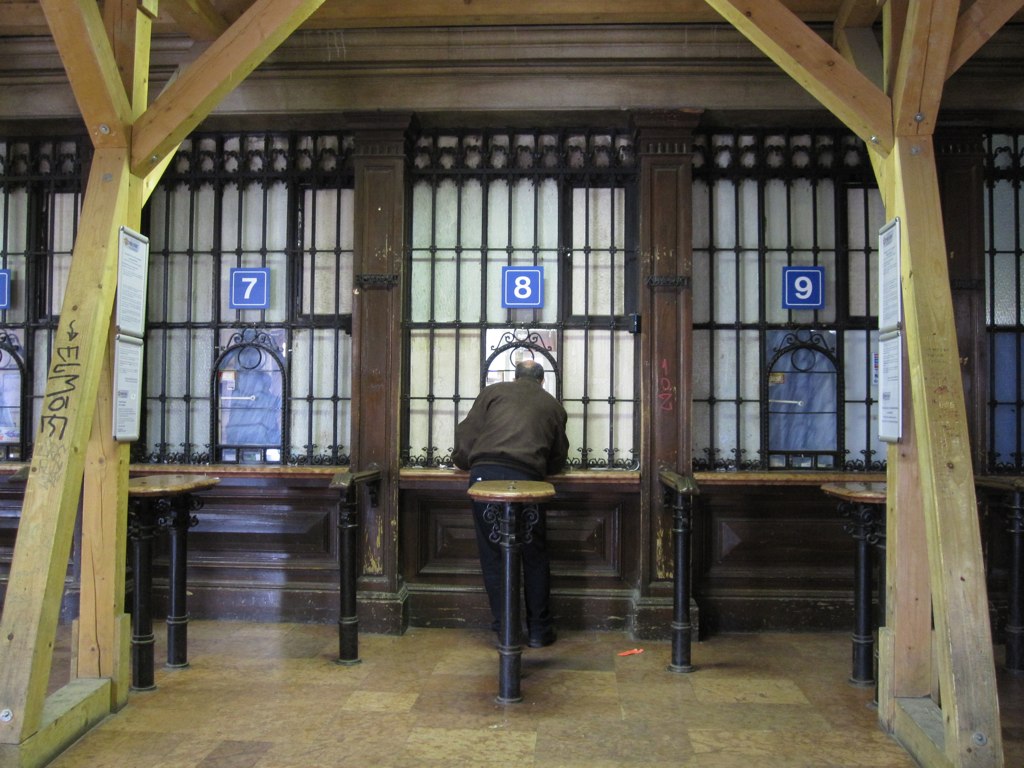
So, to illustrate "sympathy." Let's say you miss a very, very important train because the taxi you called to take you from your hotel to the train station was late, then got stuck in traffic, then was further delayed because the main road leading to the train station was closed.
Now, when you finally arrive at the ticket booth of the train station to see if another train is heading to the same destination later in the day, you say to the ticket booth worker: "Damn it! I can't believe I just missed my train. Now I probably won't be able to see my friend in another city who is very sick. I tried to make the train and wanted to so bad, but so many things prevented me."
If the ticket booth worker says to you -- "Jeez, I am so sorry. It sounds as though you tried to run to get here as fast as you could and it was very difficult for you. I see you're sweating. This all must have been very hard for you. Let me see if there is anything I can do. Maybe we can get you on a special train tonight to where you need to go..." -- then she would be expressing sympathy for you. She cares for your feelings.
However, if the ticket booth worker were to have this response -- "Oh my god, I am so sorry that you missed the train to your friend. That's terrible. I remember one time, I also missed a train that I needed desperately. And I know exactly how you feel because I was actually on my way to see a friend that needed me really badly, too, and it was so terrible not to be able to be there for him because I just wanted to give him my support. I understand exactly what you must be going through"-- then the ticket booth worker would be empathetic to you. She understands -- truly understands -- your feelings.
Yup, so there it is, folks: the difference between "sympathy" and "empathy." I hope you've enjoyed the show.
Wednesday, December 25, 2013
Just thinkin back
Me free-associating about my childhood in Forest Hills, Queens. It's interesting if you're feeling patient.
My grandma coming to pick me up from school because I say I'm sick but I'm really just faking sick so I can go home and play "Super Mario 3." The plants that were in that area near the Zenith TV and how the air-conditioner always sounded so nice and it was always so cold and when you looked across the street you saw a parking lot with yellow lines separating the spots, and cinder blocks. Oh, and in the back there was a fire escape and we had this giant metal gate behind the window that let out onto the fire escape so no one could break in and there was a padlock on this gate and the key to the padlock was on the dusty windowsill and how my mom had put a chunky plastic keychain on the key to this huge gate. I was always scared to unlock that gate. I think I did it once. And all the pennants I had on my wall. I had Mets pennants on my wall and the way I used to stare out at my mom in the living room from the bedroom. She was watching TV on the couch but in the railroad apartment at night I always liked to look out at her and how it made me feel good if I could see her. And that humidifier we had. I was always fascinated by it. It was green and what was a humidifier? And why did we have it? But I knew the name, I learned that word, "humidifier." And how when I would flush the toilet it would always make this sound: "Joo-weh-jeh." Strange, right? And there was that time when I had gotten up in the early morning to pee and started thinking thoughts like, "Where did language come from?" and how, after I told my mom that I was thinking thoughts like that, she told me she was impressed that I was thinking thoughts like that and asking questions like that. And that fuzzy couch that we had in the living room and how it was, like, grey and black or something and the rug, which was red and huge and had some kind of Native American pattern on it. Whoa. And how I'd look out of the window at night in the winter and there would be snow on everything, on the branches, on the railings, on the air-conditioner boxes, in the streets, and how everything would sort of glow with a pinkish glow and you'd hear the crunch of one person digging his car out of the snow and how the window was so cold and how the window was not new and how the window frame was made of wood and the wood was rotted away in one or two places and how it looked like if you threw a stone at the window, it would definitely shatter. The whole damn thing would definitely shatter. And then there was that caged staircase across the street that I once dreamt about. I once dreamt that my aunt and I walked down this staircase. In reality the staircase led to the basement of a laundromat or a supermarket. But in the dream the stairs led down to a diner and my aunt and I sat at blue, plush, swivel stools and ordered lots of food and lived it up down there, like it was a hot spot, like it was a social club or something like that. And I swore, I swore that we had really been down there together. And how I once wanted to sleep over at my aunt's apartment, across the lobby, on the other side of the apartment building, but then chickened out when it actually came time to do it. I told my aunt I wanted to go back to my apartment, to my mom, and she took me. And how I was once told that someone once swiped my aunt's purse from off her fire escape when she left it on her fire escape. And how I just could not understand that. What would she ever be doing on her fire escape? (She was smoking.) And how exactly did it happen? Did a hand just reach somewhere and grab it in the night or something? And where was everyone when this hand, this disembodied hand, stole this purse? And that was why we kept the fire escape locked. And yeah, you had to walk up to my aunt's apartment. She was not on the first floor. And you walked up there and once you arrived at the top of the stairs, you did an about face. And if you kept walking straight you'd arrive at her doorstep. Just remember a smothered type of feeling in her dining room. But nothing bad. Oh, but remember pictures of the same scene but with my mom wearing a sweatshirt that she'd gotten made up that said, "I Love Chad Reid." How about that, huh? And playing handball with myself in the hallway and how the big Eastern European immigrant families would set up tables in the hallways -- in the hallways -- and eat in the hallways because they couldn't fit all of the guests into their homes. Georgia, Ukraine, Lithuania. These people were from these places.
My grandma coming to pick me up from school because I say I'm sick but I'm really just faking sick so I can go home and play "Super Mario 3." The plants that were in that area near the Zenith TV and how the air-conditioner always sounded so nice and it was always so cold and when you looked across the street you saw a parking lot with yellow lines separating the spots, and cinder blocks. Oh, and in the back there was a fire escape and we had this giant metal gate behind the window that let out onto the fire escape so no one could break in and there was a padlock on this gate and the key to the padlock was on the dusty windowsill and how my mom had put a chunky plastic keychain on the key to this huge gate. I was always scared to unlock that gate. I think I did it once. And all the pennants I had on my wall. I had Mets pennants on my wall and the way I used to stare out at my mom in the living room from the bedroom. She was watching TV on the couch but in the railroad apartment at night I always liked to look out at her and how it made me feel good if I could see her. And that humidifier we had. I was always fascinated by it. It was green and what was a humidifier? And why did we have it? But I knew the name, I learned that word, "humidifier." And how when I would flush the toilet it would always make this sound: "Joo-weh-jeh." Strange, right? And there was that time when I had gotten up in the early morning to pee and started thinking thoughts like, "Where did language come from?" and how, after I told my mom that I was thinking thoughts like that, she told me she was impressed that I was thinking thoughts like that and asking questions like that. And that fuzzy couch that we had in the living room and how it was, like, grey and black or something and the rug, which was red and huge and had some kind of Native American pattern on it. Whoa. And how I'd look out of the window at night in the winter and there would be snow on everything, on the branches, on the railings, on the air-conditioner boxes, in the streets, and how everything would sort of glow with a pinkish glow and you'd hear the crunch of one person digging his car out of the snow and how the window was so cold and how the window was not new and how the window frame was made of wood and the wood was rotted away in one or two places and how it looked like if you threw a stone at the window, it would definitely shatter. The whole damn thing would definitely shatter. And then there was that caged staircase across the street that I once dreamt about. I once dreamt that my aunt and I walked down this staircase. In reality the staircase led to the basement of a laundromat or a supermarket. But in the dream the stairs led down to a diner and my aunt and I sat at blue, plush, swivel stools and ordered lots of food and lived it up down there, like it was a hot spot, like it was a social club or something like that. And I swore, I swore that we had really been down there together. And how I once wanted to sleep over at my aunt's apartment, across the lobby, on the other side of the apartment building, but then chickened out when it actually came time to do it. I told my aunt I wanted to go back to my apartment, to my mom, and she took me. And how I was once told that someone once swiped my aunt's purse from off her fire escape when she left it on her fire escape. And how I just could not understand that. What would she ever be doing on her fire escape? (She was smoking.) And how exactly did it happen? Did a hand just reach somewhere and grab it in the night or something? And where was everyone when this hand, this disembodied hand, stole this purse? And that was why we kept the fire escape locked. And yeah, you had to walk up to my aunt's apartment. She was not on the first floor. And you walked up there and once you arrived at the top of the stairs, you did an about face. And if you kept walking straight you'd arrive at her doorstep. Just remember a smothered type of feeling in her dining room. But nothing bad. Oh, but remember pictures of the same scene but with my mom wearing a sweatshirt that she'd gotten made up that said, "I Love Chad Reid." How about that, huh? And playing handball with myself in the hallway and how the big Eastern European immigrant families would set up tables in the hallways -- in the hallways -- and eat in the hallways because they couldn't fit all of the guests into their homes. Georgia, Ukraine, Lithuania. These people were from these places.
Sunday, December 01, 2013
Pretty darn good

My mother is an interesting character. She loves literature, can identify great writing, can write incredibly well herself -- just ask the New York Daily News; it has published about 10 of her "letters to the editor" -- but she doesn't "enjoy" writing. So she doesn't write that much, or as much as I think she should.
Still, there are some times when she'll be on a trip overseas or walking on a beach, among driftwood and a myriad of unique sea stones, and she'll get inspired and put pen to paper. When such moments of inspiration strike, she often writes haikus because she believes that the format "focuses your mind and helps you find a succinct sharp description…."
Recently, she emailed me one of her haikus. She was on a trip out West -- my mom loves it out West -- and she was visiting a place called Antelope Canyon, in Arizona. The site is known for its spectacular sandstone rock formations. Inspiration struck -- after all, did you see the picture above? -- and, boom, I had a photo of the site and a poem describing it in my inbox.
But my mom, you should know, is modest. So in the email, she sent the following message alongside her poem: "Not great poetry, but I was looking for a verbal description."
Well, Ma, I beg to differ. I thought the haiku was pretty darn good. Here it is:
Swirling waves sandstone rock
Crimson tight sharp corkscrew turns
Antelope Canyon
Friday, August 09, 2013
Gun violence hits home: thoughts and memories
Wow. The old saying "you never think it can happen to you" is unfortunately resonating with me now. On Monday night, a man armed with a gun shot to death three people, including a person I know -- at a municipal meeting in Ross Township, Pennsylvania. Ross Township was a township that I used to cover when I was working at the Pocono Record. Four townships were under my charge; Ross, a rural community with rolling hills and long country roads, was one of them.
Sadly, I know that gun violence is endemic in America. But you're not prepared -- just as many say -- when it happens to you or people you know. And, to top it all off, the reporter who was hired to replace me was at the meeting and barely escaped with this life.
Anyway, in recent days, I've done a lot of thinking, especially about one of the victims. I knew him personally, as he was a township official with whom I often worked. His name was Dave Fleetwood. But let me not go any further. Below I'm going to copy what I wrote in my journal on Tuesday, the night after the attack. I wrote the entry -- which focuses mostly my interactions with Dave -- sitting in my kitchen late at night. The text is verbatim. I hope you get something out of it.
Sadly, I know that gun violence is endemic in America. But you're not prepared -- just as many say -- when it happens to you or people you know. And, to top it all off, the reporter who was hired to replace me was at the meeting and barely escaped with this life.
Anyway, in recent days, I've done a lot of thinking, especially about one of the victims. I knew him personally, as he was a township official with whom I often worked. His name was Dave Fleetwood. But let me not go any further. Below I'm going to copy what I wrote in my journal on Tuesday, the night after the attack. I wrote the entry -- which focuses mostly my interactions with Dave -- sitting in my kitchen late at night. The text is verbatim. I hope you get something out of it.
Well, what can I say. Today I got some fucked up news from the U.S. I learned that a gunman stormed the Ross Township building during a monthly supervisors meeting and killed three people, including someone I used to know. The gunman killed Dave Fleetwood, who is the supervisor of Chestnuthill Township and the zoning codes officer of Ross.
But anyway, yeah. I'm stunned and sad. Real sad. This guy, Dave Fleetwood. He was a good guy. He liked to joke around, in his funny dry way. I spoke with him several times and was really hoping that he wasn't going to be one of the victims. But he was. When I learned today that it was Mr. Fleetwood who in fact was killed, I yelled out "fuck." I didn't even mean to yell that. It just sorta came out.
Anyway, I just can't believe he's gone. I don't know. Dave wasn't that outgoing, but he definitely acknowledge me when I would show up to meetings while working for the Pocono Record. Some supervisors, believe it or not, wouldn't acknowledge me. But Dave did. I also remember he gave me a story tip. I had showed up to the Ross Township building one day looking for someone but they weren't there. But Dave was there and he recommended that I do a story on the E-911 readdressing stuff. I said that I'd look into it and did. The story didn't materialize because it had been done. But still. It was nice of him to have given me a tip.
One of the strongest recollections I have of Dave is also, ironically, one I can't exactly remember. It was at the Chestnuthill Township building and it was at night. Oh, wait, I think I know what happened. I showed up to the Chestnuthill building at around 8 p.m. in early April. It was for a supervisors meeting and it was a rainy night. When I got there, I saw through a glass door that no one except the supervisors was in attendance. Anyway, all the supervisors were sitting at a long table at the front of the room, the town-hall room. They were sitting under a light, talking. The door to this town-hall room was locked and I was outside, looking in, getting rained on. I knocked on the door, which, again, was made of glass, and Dave Fleetwood, who along with the other supervisors was able to clearly see me, pretended he couldn't hear or see me even though he and the other supervisors obviously could. (They had a direct line of site at the glass door, which was about 15 feet from their table.) And so I, the unfortunate butt of this little joke, stood for a few more moments in the pouring rain. Eventually, one of the supervisors -- it might have even been Fleetwood -- got up, let me in and we all had a big laugh about it.
Another memory I have of Fleetwood: I was at another meeting and there was a heated discussion going on and I was sitting in the front row and I wanted to ask a question but for some reason I couldn't. Dave, who was sitting at the head table in front, saw on my face that I wanted to ask a question and he actually knew from the context what the question was. Once he got all this, he actually interrupted the meeting and said, "But wait. I think Chad wants to ask a question and I think I know what the question is." He did, and answered it. I remember being very impressed.
Two other people were killed in this attack that claimed Fleetwood's life. But Fleetwood was the only township official. The other folks were regular citizens. The gunman, apparently, was someone who had a long-standing feud with the township. I guess the township condemned his property or something. The Pocono Record quoted the gunman as saying he wish he would have killed more people. A Pocono Record reporter was even at the meeting! My replacement!
But anyway, yeah, Dave Fleetwood. I'm really sad. And the gun culture in America...something really needs to be fixed. But Dave was a good guy. And now all this. And now all fucking this.
Thursday, August 01, 2013
Little helper

Today, I had the coolest little experience.
I was sitting in a cafe with a cup of coffee, trying to kill some time. I had an appointment at 11 a.m. but it was only 10:15, and so I decided I’d hang out at the cafe, get some coffee and play chess on my MacBook until I had to leave.
Now, the chess program that comes with the MacBook is very powerful, and I sorta have a rivalry with it. The program doesn’t make any mistakes, per se, so you really just have to overpower it to win. Your play must be sound and aggressive.
I really had no idea where he came from. He was a small, mixed-race boy with light-brown skin and frizzy black hair. I think he walked into the cafe with a white woman.
At any rate, before I knew it, the boy was right beside me, looking at the game on the screen.
I didn’t really mind -- although, admittedly, having this curious kid right by my side was a little distracting -- and I just kept on playing. When I’m into a chess game, I don’t stop to talk with anyone.
“Spielst du Schach?” he asked, German for “Do you play chess?” I said, "Yeah." Then I asked him if he played. He said he also did, and we went on looking at my game.
And, well, yeah. The black knight retreated to the exact square I thought it would. Yes, you could have called it a pointless move. But, then again, maybe the move wasn’t such a pointless one for my young friend.
At any rate, with the black knight now settled into its new defensive outpost I tried to find some other attacking moves. I found a few good ones, but I didn’t make any of them without consulting my little friend first.
And together, we forged on. I told him my thoughts on the game, he his.
I tried to find a way to win; I really did. But it was a bit difficult because, even though I wanted to make the moves I wanted, I also didn’t want to discourage this kid by not paying attention to his ideas. And so what wound up happening was I made some of the moves he recommended despite my better judgment.
And, well, because I did this, our initiative started to disappear. The computer stabilized its position and things began to look bad for us. But that was OK, I thought, because by that point, I had to leave the cafe and get to my appointment.
Owing to the fact that I knew the game was totally lost at this point, I let him take over completely. I let him make a move that invited a nasty check from the computer. Even though the consequences of making such a move were obvious to me, he was totally dumbfounded. But that’s OK.
After looking at the screen for a few seconds, just to see exactly how the deathblow was dealt, the little kid joined his mom or guardian -- I’m not exactly sure who this woman was -- and I said, “Chess is fun” in German, and he agreed.
And then, finally, I saw what the computer was setting up for. It moved its bishop to c5, and now had our king directly in its crosshairs. The computer was setting up for the coupe de grâce.
My little friend, though, still didn’t think the game was over. But I told him in German that we were in serious trouble. “Uh oh,” I said, “Wir haben grosse Probleme. “We have big problems.” I told him to look at the enemy bishop on c5 and how we would be in “discovered check” -- a very bad thing to be in -- once the enemy rook moved away from the square right near our king. The end was clearly close.
But still, my buddy was not discouraged. I pointed to the bishop and I showed him how the enemy had coordinated its pieces to checkmate us. And then I said, “Guck mal. Wir sind tot. Aber es ist schoen.” “Look, we’re dead. But we’re being killed in a very elegant way.”
Finally, the little fellah saw. “Ahh, ya,” he said. “Schachmatt” – “checkmate.”
And so I moved, and then black moved its rook, just as I had thought, and indeed we were checkmated.
I then cleaned up around the area where I was sitting and said goodbye to them both.
It was the coolest little experience.
Tuesday, April 09, 2013
My rejected poem
Here's a poem of mine that recently was rejected by the New Yorker. I think it's good, damn it.
Judgment
Ring-ring!
Yes;
Speaking;
This is he...
But never.
God, never.
Please, please never.
It is him.
Tuesday, February 12, 2013
Simple but very cool
This footage I found on YouTube of Nirvana's 1989 Bleach tour is super interesting. Though the video pretty much just shows the band on the road, doing their thing, and the moments that are captured might seem mundane, I feel like the video feels kinda special. If anything, it's a testament to the coolness of technology. I mean, video cameras capture and can transport us in an instant back to these moments that probably would have otherwise just fallen through the cracks of our fingers like fine sand.
Check it out. I think the video gets really cool around 1:34, when Krist says, "We should move in our stuff before it starts raining."
Check it out. I think the video gets really cool around 1:34, when Krist says, "We should move in our stuff before it starts raining."
Saturday, February 09, 2013
Funny how things work

Normally, I don't usually write about the dreams I have. Everyone knows dreams are crazy and everyone's dreams are crazy. So it's not usually that interesting. But last night I had a dream that was, well, yes, crazy, but also gives a lot of insight into how the mind and things work. So I'll tell.
It all started on Friday night -- in real life now -- when was I sitting in someone's living room. I was hanging out with a bunch of people, we were all drinking wine and I was a bit buzzed. As we sat there, someone recommended we put on a British sitcom. At first I moaned because I just never found British humor funny.
Anyway, this person, a girl, eventually put on the show, and, as I had suspected, I didn't find it funny. It was all, well, British. But the girl kept on raving about it. I told her I didn't get it. Then I told her that I wondered if it was me. Did I just not get it or something? Was British humor an acquired taste? I just didn't find any of it funny.
This girl said that she didn't think that British humor was an acquired taste, but she did say that if you watch British sitcoms, you really have to pay attention to find it funny. Another person in the living room chimed in and said, "Yeah, you're not going to turn on a sitcom like this" -- referring to the one on the TV -- "and go in the kitchen and cook yourself dinner while keeping an ear on it." They both agreed you really need to pay attention.
Sensing that I was still a bit frustrated with this answer, the girl said, "Well, in all honesty, maybe it's not good to start you off with this kind of show. It's a bit sophisticated." So she quickly went to YouTube and found something that she thought was simpler, a British humor skit that was perhaps more accessible to an American.
She clicked play. The skit all about this guy who goes fishing at night. And something strange happens. This guy, he's fishing and he is out there on the water and all of a sudden some sort of fish creature, some sort of ugly, scaly, half-man-half-fish, drag-queen looking creature with seaweed on his head jumps on his boat.
The creature guy, whose wearing a pink tutu, mind you, exposes himself to this man and a ray of light shoots forth from his genitals and hits the man in the eyes. The ray of light knocks the unconscious. When the guy wakes up, he is now in the swampy lair that this creature, this loathsome, detestable funky creature calls home.
The guy tells the fish man that he wants to leave, that he has places to be and wants to go home but the swamp-thing stalls. The creature tells the guy he should have some Bailey's Irish Cream -- it's pretty much the only thing this creature has in his "home" -- and he has bottles and bottles of it!
Anyway, the two talk and the creature -- who says his name is Old Gregg -- suddenly asks the guy -- "Do love me?" And the guy flatly answers no. But then the creature says, "Do you think you could ever love me?" Again, the guy says no. The creature keeps going, "Do you think you could learn to love me?" Same response. Then the creature finally says, "You do love me." The two argue and the guy finally says, "I find you slightly pathetic, so deal with that." The creature, slightly stung, says, "Maybe I will deal with it, hmm. Maybe I'll deal with it the way I dealt with Curly Jefferson!" and points to a spot in the layer directly above the guy's head. The guy looks up and, directly above him, a few feet up, is this guy, like, glued to the ceiling, dead. The dead man's face is a bit mutilated and frozen in a horrifying grimace.
So the guy, now scared and probably fearing for his life, says, "You know what...maybe I was being a bit hasty there when I said I didn't love you." Just as quickly as he said he didn't love him, now says, "Perhaps now, in this light, with you, in the tutu, and the...water playing off your...seaweed...maybe I... could love you. Maybe I was lying because sometimes when you do love someone you...say you don't because...you're playing hard to get, playing a game."
Eventually, after a little more talk and a musical number that the two perform together, the creature says that he'll take the guy back above ground, back to dry land, the real world, if he agrees to "take my hand" -- which is really a flipper -- "in marriage."
Seeing a way out of this hell, the guy agrees, and the creature puts a ring on him and the two go back up to the real world. The skit ends with the creature in a wedding dress standing on top of a moving van driven by the guy. (Don't ask.) The creature, standing up there on the roof, wind blowing in his sea weed, lifts up his skirt. His genitals again emit a ray of light and he gives off one final, thunderous shout, "I'm Old Gregg!"
After the skit ended, I was bewildered. I didn't think it was really very funny -- all right, maybe a tiny, tiny bit. But I really thought it was strange, almost disturbing, that people would actually think such a skit was funny. "What's up with those people in Britain," I thought.
Anyway, skip ahead a little to later in the night. I get home, brush my teeth and go to bed. And I have this dream. And in my dream, I'm telling my mother about having watched this skit. I'm saying, "Ma, you should have seen this British humor skit that I watched. It was really awful." And then I start recounting the details. The guy, the freaky fish creature, his swampy lair. And then I start telling my mom that the only thing that this creature has in his lair is bottles and bottles of Bailey's Irish Cream. I tell my mom how the creature keeps on offering his "guest" more glasses of Irish Cream.
And, all of a sudden in my dream, that seems kinda funny.
And then I tell my mom how the fish-man suddenly asks his reluctant guest through blubbery, red lipstick-painted lips, "Could you love me?" And how the guy dryly says "No." And how they go back and forth with that. OK, I think in my dream, that's actually pretty funny. Then I tell my mom how the guy gets scared by seeing the last person who refused the fish-man's advances and how the guy then quickly changes his tune and says, "You know, I think I could love you...Maybe I was just playing hard to get."
And all this starts to seem really, really funny. As I tell my mom all these details, the skit, in fact, seems more and more like a riot.
So yeah.
Now skip ahead to my waking up today. I wake up and I realize that I had this dream, and I think to myself, "Holy crap, was that skit funny? I think it was. I think it actually might have been one of the funniest things I've seen in a long time." And I really, really want to watch the skit again. And so I do.
And now I think it's funny as heck.
But first I had to recount the details in a dream and think they were funny in a dream before I could process it all and think it's funny in real life.
***
Here's the actual skit. Let me know what you think.
***
Here's the actual skit. Let me know what you think.
Subscribe to:
Posts (Atom)